
Categories
recipe

Gluten-Free Pie Dough

When I was growing up, my grandmother made the best pies anyone in our family had ever tasted. Her blackberry cobbler was my favorite. As a child, I spent hours in her kitchen learning to follow her pie dough recipe. This remains one of my favorite childhood memories. After her death, baking a pie became a communion of sorts — a way to remember her and spend time with her spirit (if you believe in that sort of thing). Upon experiencing symptoms of chronic illness and being told by my doctor to cut the gluten, I felt like something important was being taken from me. I struggled with how to honor my grandmother’s memory while also honoring the needs of my body. So I set out to write the perfect gluten-free pie recipe — one I could serve to my family with pride and feel connected to my late grandmother while baking it. It took years, but I finally mastered the pie crust…and am thrilled to share it with you.
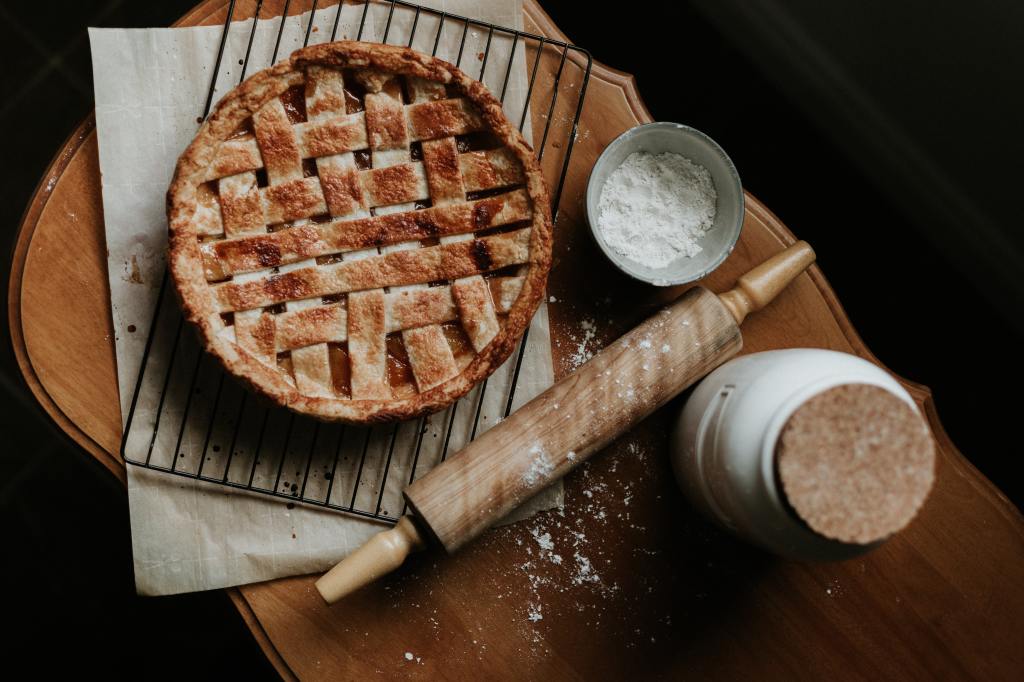
Ingredients

  • 2 cups gluten-free flour (Bob’s Red Mill 1 to 1 Gluten-Free Flour or Cup 4 Cup All Purpose Gluten-Free Flour)
  • 1 teaspoon salt
  • ⅔ cup salted butter, COLD
  • 1 egg
  • 1-3 tablespoons water, ICE COLD

Preparation

Mix flour and salt.

Cut butter into small cubes. Add to flour mixture.

With your fingers, smush the butter and flour together until the texture is like peas.

Drizzle 1 tablespoon of water over the mixture and lightly mix with a fork.

Crack the egg in a separate small bowl and quickly whisk with a fork.

Pour egg into the flour mixture and lightly mix with a fork to barely combine. The pieces should be barely moistened and should be starting to come together into a ball. Add more water, SPARINGLY, if needed.

Knead the dough into a ball. DO NOT OVER-KNEAD, or the dough will be tough.

Roll out for the desired purpose.

Keep covered with a wet paper towel if not immediately used. No, seriously, just a few minutes of alone time will dry it out.

Categories
review

Podcast Review: Spooning with Spoonies

I love feeling seen and heard in my journey with chronic illness. Feeling cruddy all the time is hard enough without feeling alone in it. That is why I get excited when I find a book, movie, or podcast that helps strengthen my sense of community.

Spooning with Spoonies” is by far the best podcast about chronic illness that I’ve found as of yet. Noa Porten creates a safe yet hilariously relatable atmosphere to discuss how to have a relationship (or at least have fun dating) while you feel cruddy.

As a young person with chronic illness, Noa is the perfect person to explore how our annoyingly sick bodies often get in the way of our need for relationships. She addresses how to tell a fling you are chronically ill, how to maintain a healthy marriage while making your health a priority, and how to enjoy laughing at yourself (because let’s be honest, you’ve gotta laugh).

Her willingness to discuss the intricacies of maintaining wellness while exuding a bubbly sense of humor is refreshing. Her guests are diverse in their health challenges (UC, Lyme, etc), but are consistent in their openness. I laughed when Natalie Kelley discussed navigating the overnight bag situation without scaring away your date; I cried when Tina Omprakash talked about family members’ requests for her husband to initiate a divorce; I felt extremely seen when Jake Mayers owned up to his self-judgment when it came to achievement and productivity.

Overall, I recommend this podcast for anyone chronically ill, anyone in a relationship with a spoonie, and anyone who just wants to try to understand what we go through. 

Check out the podcast “Spooning with Spoonies”, as well as their social media pages below.

Categories
chronic illness

Trying to Get Diagnosed

There’s nothing more ironic than a chronically ill person who dreads the doctor. The thing is, when you’re a woman with an invisible illness, you tend to spend more time managing your doctor than your doctor spends managing you…as if being sick wasn’t exhausting enough.

I’m 28 years old and I only just recently received an official diagnosis for the pain and problems I’ve been experiencing since my Freshman year of high school. I went to doctor after doctor for thirteen years trying to find someone who would take me seriously. Looking back at my exam room experiences, the things doctors have said to me are laughable, once I stopped fuming. 

I’ve been told:

  • I’m faking for attention
  • I just have growing pains
  • It’s just stress
  • Yoga should solve the problem

My personal favorite is when a doctor told me I should just feel lucky my pain isn’t as severe as that of his other patients. Yeah, you read that right.

It’s not just doctors. I’ve been literally laughed at by a physician’s assistant when I attempted to describe my nerve pain and phantom sensations. 

So now that I finally have a diagnosis of Ankylosing Spondylitis, I’m dreading going to the Rheumatologist. What if they are yet another doctor who shouldn’t be a doctor? I know I have to take the leap sooner rather than later, but I’m too exhausted to manage my doctor.